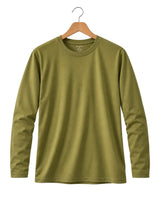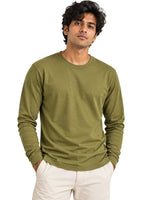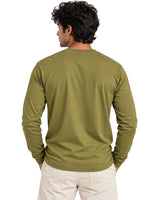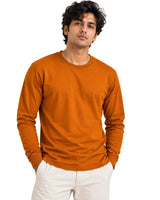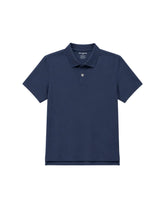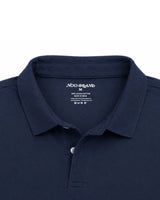








The Untold Story of the Crewneck T-Shirt: From Military Utility to Global Icon
Today, the crewneck T-shirt is the most universal piece of clothing in the world — but its story began far from fashion runways. Journey with us through a century of evolution to see how a simple round neckline became a cultural symbol of comfort, rebellion, and craftsmanship.
Where It All Began: The U.S. Navy, 1913

Long before the crewneck became a fashion essential, it was created for something far more practical — solving a problem for U.S. Navy sailors. Heavy wool uniforms were uncomfortable, itchy, and difficult to clean. Sailors needed a base layer that was breathable, quick-drying, and easy to wash while at sea.
And so, in 1913, the first-ever crewneck undershirt was issued — a lightweight cotton garment with a round neckline that sat flat against the chest.
“The first crewnecks were made for utility, not fashion — but perfect design always finds a way to evolve.”
The Hollywood Revolution: The Crewneck Becomes a Star

For decades, the crewneck remained hidden under uniforms — until Hollywood changed everything. In the 1950s, actors like James Dean and Marlon Brando appeared on screen wearing nothing but a plain white crewneck. It was rebellious. It was raw. It was real.
This single moment transformed the crewneck from underwear to outerwear. The world saw it not as a basic garment, but as a symbol of effortless cool.
Why the Crewneck Endured: A Perfectly Engineered Shape
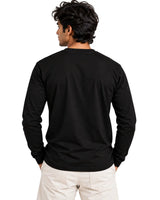
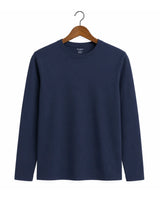
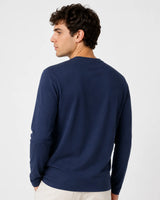
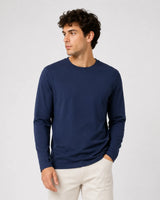
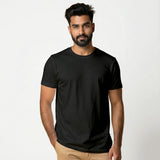
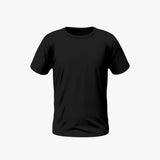
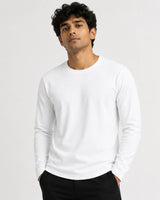
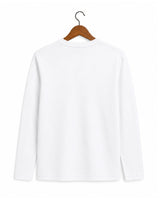
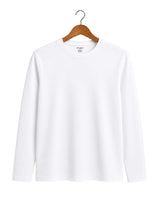
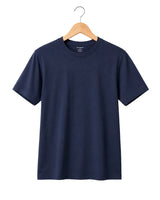
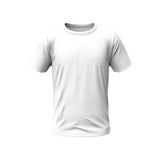
The crewneck is deceptively simple — a round neckline, clean stitching, and a flat collar. But this design works for every body type, every climate, and every purpose. It layers effortlessly, sits comfortably, and has a universally flattering shape.
Its reliability is why sports teams, workers, artists, and everyday people adopted it. The design never needed radical change — because it was right from the beginning.
The Modern Reinvention: Premium Cotton Takes Over

As fashion progressed, brands began experimenting with fabrics. But the real transformation arrived with long-staple luxury cottons like Supima and Suvin. These fibres elevated the crewneck from a basic tee to a premium essential.
- Exceptional softness that gets better with every wash
- High breathability for Indian summers
- Stronger fibres that resist pilling and fading
- A smooth, natural drape that enhances the silhouette
NooBrand’s Role in the Evolution of the Crewneck

NooBrand takes the century-old crewneck silhouette and elevates it with modern craftsmanship. Our focus is on fabric purity, comfort, and minimalist design.
- Premium fibres only — Supima and Suvin cotton.
- Precision patterns — ideal drape & alignment.
- Long-lasting collars — ribbed to hold shape.
- Sustainable production — responsible sourcing.
The Crewneck’s Cultural Legacy

From soldiers to rebels, from athletes to musicians — the crewneck T-shirt represents universality. It adapts to the wearer, becoming a symbol of expression without trying too hard.
Frequently Asked Questions
1. How were crewneck T-shirts originally invented?
The crewneck began as a U.S. Navy undergarment in the early 1900s.
2. Why is it called a “crewneck”?
The term comes from rowing teams (crews) who wore this rounded neckline because it stayed flat and comfortable.
3. Why did the crewneck T-shirt become so popular?
Hollywood icons like Brando and James Dean made it a global symbol of effortless style.
4. What fabric is best for a crewneck T-shirt?
Premium cottons like Supima and Suvin offer the best softness, strength, and breathability.
People Also Ask
What materials are used to make crewneck T-shirts?
Most crewnecks use cotton, but premium versions use long-staple fibres like Supima or Suvin.
Why do crewnecks never go out of style?
They offer a timeless silhouette and work across all outfits — from casual to layered.
Are crewnecks better than V-necks?
Crewnecks suit more body types and are preferred globally.
At NooBrand we follow a transparent editorial process to ensure accuracy and trust. This article was created using military archives, film references, textile studies, and interviews with garment makers.
Sources & References
- U.S. Navy Uniform Archives
- Smithsonian Costume & Textile Collections
- Public domain film stills
- Textile journals on Supima & Suvin cotton
- NooBrand textile specialist interviews
Last reviewed: December 2, 2025